In the News
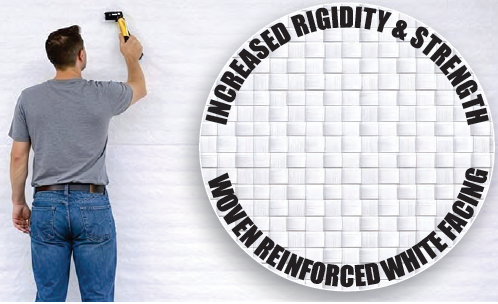
Full ViewAll New Staple Guard Ready for Order. Makes for Easy Install!
Our Customers spoke and we listened. Our customers asked for a product with increased strength and rigidity and now we’re introducing rFoil Staple Guard 2710. It’s ideal for easy installation and comes with an industry best 10 Year Warranty. It is recommeded for the following applictions:
-
-
- Post Frame / Pole Barns
- Residential Metal Roofs
- Agricultural Buildings
- Livestock Confinement
- Sheds & Mini Storage
-
Find out more about all-new rFOIL Staple Guard 2710 here.
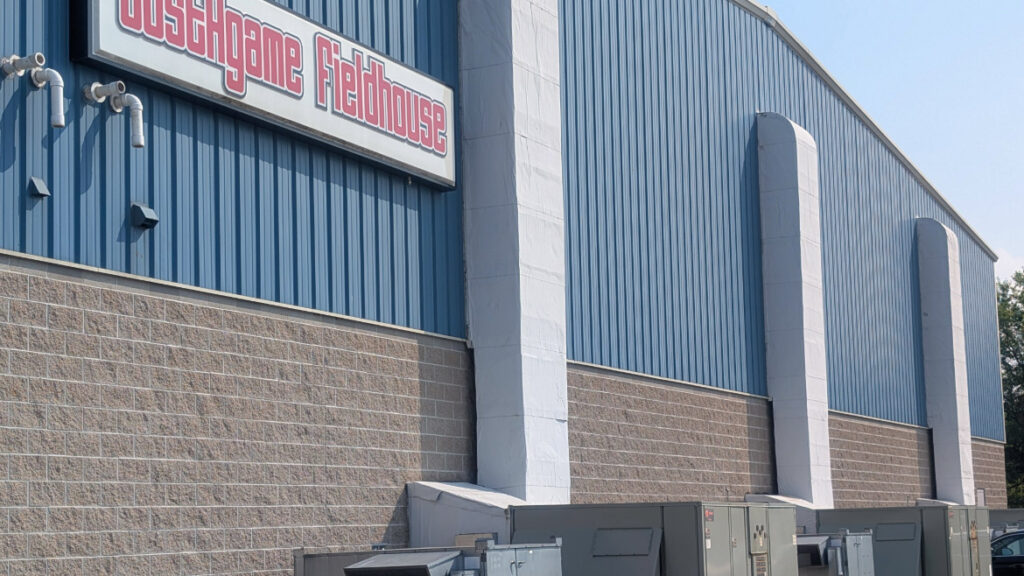
Full ViewThe Sports Complex Boom and the Unsung Tech That Makes it Work
Duct wrap and reflective insulation help keep temperature-controlled sport complexes cost-effective
When Mattoon, Illinois’ Emerald Acres launched, it was more than a ribbon-cutting. It was a statement: Small cities and exurbs are swinging for the fences – literally – on sports and civic complexes.
Communities like this are betting big not just for recreation, but for economic revival. As cities across the U.S. break ground on sprawling new facilities, from Jefferson City’s $30 million project to Springfield’s ambitious SCHEELS Sports Park, it’s clear: these economic lifelines, often carefully planned for central access between population centers, are bringing a flood of visitors into local economies that had been stuck in neutral for years.
The math doesn’t work if you’re only looking at the bottom line. Many of these ventures run at a loss if you just tally ticket sales and concessions. But follow the money that flows in when tournaments and events come to town – hotels fill, restaurants buzz, dormant strip malls get new life, and new franchises come into town with the promise of more consistent business.
Behind all this buzz, there’s a less visible story: the high-stakes technical battle to keep these massive spaces comfortable, affordable, and open year-round. That’s where companies like Johns Manville, Owens Corning, and Balcan Innovations (makers of rFoil and Reflectix) come in – each with their own approach to the challenge of insulating the modern sports complex.
Duct Wrap: The Tried-and-True Workhorse
TJ Stock, portfolio manager for HVAC at Johns Manville, says you’ll find their Microlite duct wrap specified or installed in most sports complexes built in the past few decades. “Microlite has been either specified or installed in most sports complexes for decades, providing thermal performance and condensation control with aesthetically pleasing silver FSK, and black or white PSK facings,” Stock said. Installers love its consistent firmness – it cuts clean, with less fraying, making long installation days go a little smoother.
When it comes to installation, Stock details, “Duct wrap installed inside the building envelope can be left exposed with FSK or PSK facings. Duct wrap installed outside of the building envelope must be properly covered by metal jacketing and sealed to prevent moisture and elements from entering the HVAC system.” When fighting bacteria and mold, Stock stressed the importance of taping and sealing the facing to create a vapor barrier that keeps moisture out. “Moisture, among other criteria, is required for bacterial growth. When installing duct wrap, one critical step is to tape and seal the FSK facing, providing a vapor barrier that limits moisture drive into the insulation, thereby limiting the potential for bacterial growth.”
Drake Nelson, market development manager for the Carolinas, also weighed in.
“Duct wrap has grown slightly over the last few years but I would not say it is increasing the market share in relation to other options,” he said. “Factors beyond cost sometimes open consideration to other technologies.”
Duct Wrap Selection
David Burd, air distribution products technical manager for North America at Owens Corning, brings another layer of expertise to the conversation. Burd said, “The two primary factors are performance and aesthetics. Duct wrap needs to perform well thermally as that is its primary function towards energy efficiency and helping to get the conditioned air into the space it’s intended. Another performance factor is the duct wrap’s ability to aid in condensation control, which ties into the thermal performance of the insulation and the vapor permeance of the facing.”
He adds that the most common and widely accepted facing is Foil Reinforced Kraft (FRK), also known as Foil Scrim Kraft (FSK), which “has a pleasing shiny appearance that’s widely accepted and selected where the duct work is exposed, such as sports bars and other open-plan public commercial spaces.” Other facings, like vinyl or Polypropylene Scrim Kraft (PSK), are available in white or black to match ceilings, while All Service Jacket (ASJ) is typically used in industrial settings.
Installation matters just as much as material. “It’s important to follow the manufacturer’s stretch-out recommendations, which will allow the insulation to recover with no more than 25% compression. When duct wrap is wrapped too tightly, the result is compression of the insulation greater than 25%. This impacts the insulation’s ability to perform to the installed R-value,” Burd explained. While duct wrap can be used in protected outdoor spaces, he cautions against using it in locations exposed to the elements, like rooftops, where a more rigid insulation board with metal cladding is required.
On the perennial concern of mold and bacteria, Burd dispels a common myth: “Fiberglass insulation is inorganic and therefore does not support mold growth. Mold can grow in any environment where there’s moisture and food for mold spores. So how do we limit the potential for this with insulation? Keep the duct wrap in the manufacturer’s packaging and protect it prior to and during installation from getting wet and allowing dust, dirt, and other organic matter from getting in and on the insulation. Then, once installed, be sure to keep your HVAC system and ductwork well serviced and maintained.”
Proper sealing also comes up in the context of duct leakage: “Properly installed and sealed duct wrap can help prevent or reduce duct leakage, but the reality is, if your duct is leaking, you should also employ other sealing methods such as using approved mastic or foil tape on the duct seams and joints prior to installing the duct wrap.”
As for why duct wrap remains popular, Burd doesn’t mince words: “It’s not just the favorable cost of the duct wrap itself, but also it’s very labor friendly to install, which also helps to keep costs down.” While it’s true that duct wrap doesn’t deliver acoustical benefits, he notes, “its lightweight and fast installation mean it’s a win-win for the contractor and the building owner—especially in open plan spaces where exposed ductwork is part of the aesthetic.”
Burd also describes the manufacturing: “Fiberglass duct wrap insulation is typically manufactured by spinning molten glass into thin fibers, bonding them together with a thermosetting resin, and optionally adding a vapor retarder like FRK/FSK.”
This wide-ranging perspective from Owens Corning’s technical manager underscores just how much goes into selecting and installing the right duct insulation for modern sports facilities.
There’s more than one way to wrap a duct. Reflective insulation, or radiant barriers like rFoil #2290 Reflective Duct Insulation and Reflectix – both Balcan Innovations brands – offer a different kind of performance.
Jim Dennison, Director of Marketing at Balcan Innovations clarifies: “No, our product is not a ‘duct wrap,’ but rather a radiant barrier. It works by reflecting radiant heat rather than reducing conductive or convective heat transfer.”
The installation process is unique: Contractors wrap 2” spacer strips doubled at 24” intervals around the ductwork to provide a ¾” air space between the ductwork and the insulation. Wrap the reflective insulation around the ductwork and seal the seams with a UL-181 acrylic adhesive tape or a clinch stapler,” Dennison explained. The method is the same for indoor or outdoor installs, though the product used may differ depending on exposure.
Health and safety are major selling points. “Contractors tell us they like working with reflective insulation because installation is quicker, the product is lightweight and easy to work with, and it does not require personal protective equipment when installing it to protect from airborne fibrous material. Additionally, our products act as a vapor barrier, are moisture resistant, and won’t harbor mold, mildew, or fungi.”
And though radiant barriers don’t eliminate duct leakage, Dennison noted, “It can reduce the impact of small leaks in metal ductwork by trapping escaping air in the insulation layer. Even though it does not stop leaks, reflective insulation will reduce heat gain/loss, which helps your HVAC system run more efficiently.”
When it comes to popularity, Dennison offers nuance. “The increasing popularity of the product is likely a combination of its form and function. Duct wrap is primarily used to prevent condensation from occurring. Reflective insulation products stop condensation from occurring, and are also easier to handle and install.”
But as Stock and Dennison both note, the choice comes down to application: cost, installation, condensation, and health, all play a role, while acoustics take a back seat in cavernous sports domes.
Dennison underscores the impact of radiant barriers and reflective insulation, especially in energy savings.
“Our customers use our products primarily because they are looking for an insulator, a moisture barrier, or a vapor barrier,” Dennison said. In thermal testing on a metal building, “the temperature without reflective insulation was over 144°F, while the temperature with reflective insulation installed was just over 90°F – a differential of over 53°F. The use of reflective insulation would no doubt reduce the owners’ cost to cool the building.”
Dennison also emphasizes versatility, but with a focus on health and safety: “Some other insulation options contain airborne fibrous material which is not a healthy option, unlike reflective insulation. Our products … won’t harbor mold, mildew, or fungi.”
Whether it’s a sports dome, a factory, or a barn floor, the technology is designed to fit the application – and the energy savings can turn a money-losing operation into a sustainable one.
More Than Just Sports
It’s easy to get caught up in the buzz of tournaments and hopes of economic turnaround. But these complexes also bring growing pains – traffic, labor, construction, debates over property taxes (and TIF district boundaries). Saturating the service sector is fraught with potential consequences. Still, for Mattoon and so many towns like it, the benefits so far outweigh the cons. The visitors keep coming, new businesses are opening, and they are reinvesting in themselves.
The unsung heroes? Maybe it’s the HVAC tech, quietly making these spaces work. Or maybe it’s the small-town optimism that keeps betting on a brighter tomorrow. Either way, the lights are on, the stands are full, the rooms are temperate, and – for the first time in a long time – there’s a real sense that the game isn’t over for America’s heartland.
This article was authored by Austin Keating (keatinga@bnpmedia.com) and was reprinted with his permission. It originally appeared in ACHR NEWS, July 9, 2025. ACHR is an HVACR industry essential and trusted independent source of news and best practices.
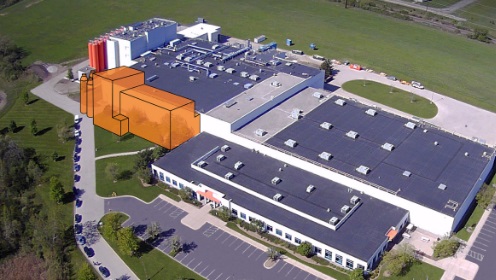
Full ViewBalcan Innovations Announces Project Sunrise
Balcan Innovations recently announced a $200 million commitment to North American Growth via the corporation’s all-new Project Sunrise. Through strategic investments in capacity, training and strategic allocation of current resources, rapid expansion is expected from 2025 through 2027.
To read more about the specific investment plans and Project Sunrise read the official Balcan Innovations press release here.

Full ViewQualifies For Income Tax Credits
As a part of the Inflation Reduction Act of 2022, home renovation projects utilizing reflective insulation are eligible for Energy Tax Credits. These credits are available effective immediately and will expire on December 31, 2031.
Residential applications that qualify for the credits include attics, walls and crawl spaces when properly installed per our installation instructions and per program guidelines.
Our products meet the most recent International Energy Conservation
Code standards – these must be met in order to take advantage of this benefit. To use the tax credit, reflective insulation products must meet the most recent International Energy Conservation Code standard in effect as of the beginning of the calendar year which is two (2) years prior to the calendar year in which such component is placed in service.
You may claim the energy efficient home improvement credit for improvements to your primary residence. Your primary residence is where you live the majority of the time.
For the energy efficiency home improvement credit, the home must be:
- Located in the United States
- An existing home that you improve or add onto (not new construction) and must be your primary residence.
To learn more about the Inflation Reduction Act of 2022, we suggest you view these links to understand how the Home Energy Tax Credits work, and the annual limits.
Click here for the ETC Certificate.

Full ViewVoted 2026 Metal of Honor Award by Metal Roofing Magazine
Metal Roofing Magazine has just announced that rFoil® Reflective Insulation products produced by Covertech Flexible Packaging, a division of Balcan Innovations Inc. was named recipient of their 2026 Metal of Honor Award.
The Metal of Honor program was created to allow metal roofers an opportunity to cast their ballot for those who help them most by providing quality products and great service. Metal Roofing Magazine’s editor, Karen Knapstein , stated, “the award recognizes the elite in our industry. We are pleased to include your company in this select group.”
There will be more information regarding this award and others in Metal Roofing Magazine’s upcoming Issue.
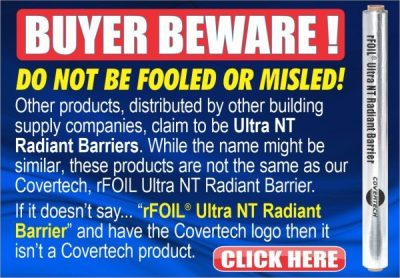
Full ViewBUYER BEWARE! The product – Ultra NT Radiant Barrier
Other products, distributed by other building supply companies, claim to be Ultra NT Radiant Barriers. While the name might be similar, these products are not the same as our Covertech, rFOIL Ultra NT Radiant Barrier.
If it doesn’t say… “rFOIL® Ultra NT Radiant Barrier” and have the Covertech logo then it isn’t a Covertech product.
When in doubt, contact Covertech to ensure you have an rFOIL® product.
Read more about “Ultra NT Radiant Barrier” and the full press release here.
View more about RF SCIF Barriers here.
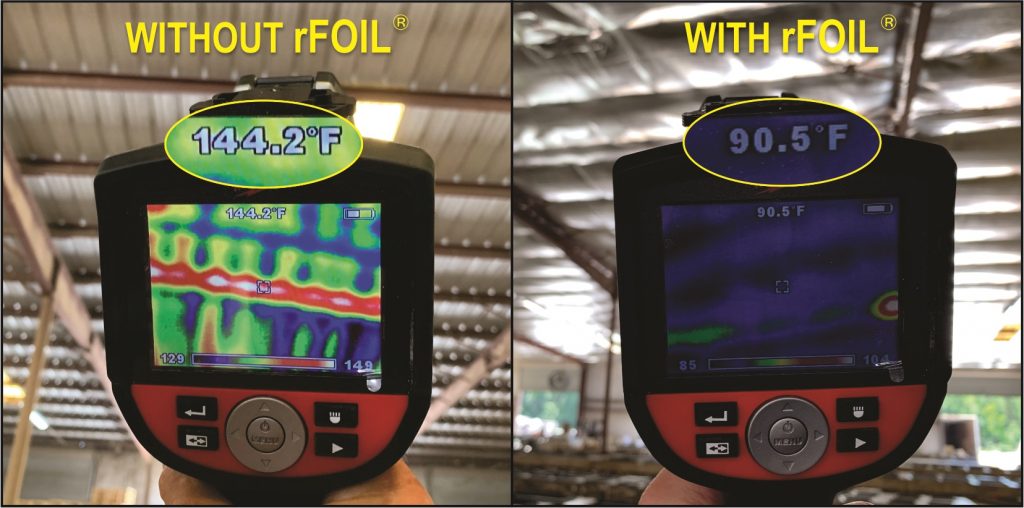
Full ViewrFOIL’s Retrofit MBI System reduces interior temperature by more than 40 degrees
Published: November 12, 2019
Toronto, ON, November 12, 2019 — For two years, work at Concrete by Design in Montgomery, Ala., has been accomplished, often under brutally hot conditions. Employees in the metal building were regularly dealing with heat up to 130 degrees Fahrenheit on hot summer days. When the heat started to affect the color quality of his architectural pavers, owner Bert Loab knew he had to do something.
After considering spray foam insulation on the bottom side of the roof and even tearing up the roof to add insulation, a conversation with a mutual friend led Loab to Kelly Myers, sales manager at Covertech, the manufacturer of r-FOIL reflective insulation. Myers suggested using the company’s recently released Retrofit MBI System designed for use in metal buildings.
The Retrofit MBI System features a patented clip and pin system combined with rFOIL’s reliable insulation to provide a cost-effective and energy-efficient way to insulate all types of metal buildings. The MBI Retrofit clip is installed to the bottom of the exposed roof purlins and inside the wall girts. The system is lightweight, and easy to handle and install. With its unique attachment system, the insulation can be quickly installed with minimal interruption to the facility’s operation.
“It was originally built as a storage building for a construction company, so it really didn’t need insulation,” Loab says. “We started working here in May of 2017 and honestly, it’s been murder. I brought in some exhaust fans to get the air moving, but really, it was just blowing hot air around.”
Not only were the conditions unbearable for the employees, but Loab’s Perfect Pavers were showing a little discoloration from the heat within the building.
Reflective insulation is designed to reduce heat gain or loss in commercial and residential applications. The bubble core and metalized film provide the perfect combination of heat reflection and thickness that outperforms materials which rely solely on mass (thickness) for thermal performance.
Once Loab discovered that reflective insulation could be added to the underside of the roofing – and that it would be easier and less expensive than spray foam or tearing off the roof to add insulation – it seemed like the best choice.
Local contractor Freddy Pettiway, owner of Pettiway Erectors in Montgomery, Ala., installed approximately 32,000 square feet of rFOIL’s Single Bubble Foil reflective insulation in the half of the building Concrete By Design operates in. Even with this being his first time installing the product, the job was completed in just more than three weeks.
“We put the clips up first and then went back to install the insulation,” Pettiway says. “The clips are a time-saver. We had to maneuver around tables and some other equipment, but the installation went great. We had to make some cuts for lights and some skylights, but you’d have to do that with any insulation. It all went great.”
The other half of the 30,000 square foot building is leased by a pallet company and there is simply too much equipment and inventory within their half of the building to retrofit with reflective insulation.
“Those poor pallet guys,” Loab says. “They come over to our side of the building and they can’t believe the difference. I’m a believer! The fact that a 1/4-inch thick material can make that much difference, well, obviously, I’m pleased with it.”
Loab says he will install the Retrofit MBI System on the other half of the building whenever it can be done. He says he also plans to install reflective insulation from rFOIL under the roof in his home to reduce heat gain.
About Covertech/rFOIL
rFOIL insulation is a single or double layer of polyethylene bubbles bonded to and sandwiched between a highly reflective surface and a white polyethylene sheet. rFOIL is recognized for its thermal performance, easy installations, versatility and environmental friendliness and offers a number of advantages over traditional insulations. Its unique construction is specially designed to reduce radiant heat gain or loss in residential, commercial, post-frame, metal frame and HVAC applications. More information can be found at https://www.rfoil.com.